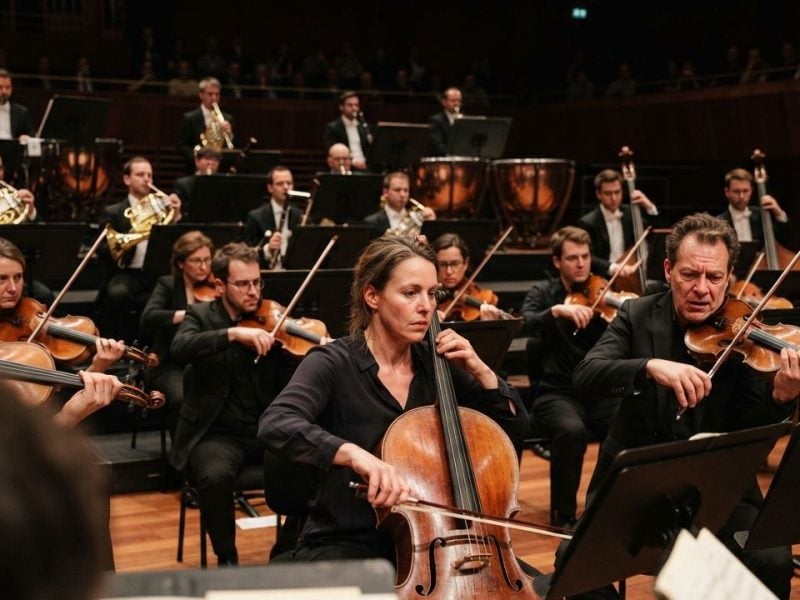

Learning an orchestral instrument is a long-term commitment that combines physical coordination, musical understanding, disciplined practice, and patience. While every instrument presents its own obstacles, some demand an unusually complex combination of skills. A player may need to control pitch without visual guidance, coordinate both hands independently, manage breathing under pressure, execute rapid finger movements, or maintain precise physical control for extended periods.
The most difficult instruments to master in an orchestra are not necessarily the largest, loudest, or most technically complicated-looking. Difficulty often comes from how many variables a musician must control simultaneously. Intonation, breath control, fingering, bowing, articulation, endurance, coordination, and musical timing can all determine how quickly a player progresses.
This guide examines the technical challenges that make several orchestral instruments particularly demanding, focusing on the process of mastering them rather than simply describing their role or sound within an orchestra.
What Makes an Orchestral Instrument Difficult to Master?
Instrumental difficulty is difficult to measure with a single standard. A beginner might find one instrument physically challenging while an advanced musician may struggle more with another instrument’s precision requirements.
Several factors contribute to the overall difficulty of mastering an orchestral instrument:
- Intonation: producing accurate pitches consistently.
- Breath control: managing airflow, pressure, and endurance.
- Fingering: coordinating complex or rapid finger patterns.
- Bowing: controlling speed, pressure, contact point, and direction.
- Physical demands: maintaining posture, strength, flexibility, and stamina.
- Coordination: synchronizing multiple movements precisely.
- Articulation: controlling attacks, releases, and transitions.
- Embouchure: positioning and controlling the lips and facial muscles.
- Musical independence: responding accurately while playing difficult passages.
- Consistency: reproducing technically demanding movements reliably.
The table below provides a useful overview.
| Instrument | Major Technical Challenge | Physical Demand | Intonation Difficulty | Coordination |
|---|---|---|---|---|
| Violin | Bowing and left-hand accuracy | High | Very high | Very high |
| French horn | Embouchure and pitch accuracy | Moderate | Very high | High |
| Oboe | Reed control and breath management | High | Very high | High |
| Bassoon | Fingering and breath control | High | High | Very high |
| Trumpet | Embouchure, airflow, endurance | High | High | High |
| Flute | Breath, embouchure, finger coordination | Moderate | High | High |
| Viola | Bowing and left-hand precision | High | Very high | High |
| Cello | Bow control and shifting | High | High | High |
| Double bass | Shifting, intonation, physical reach | Very high | Very high | High |
| Timpani | Pedaling, tuning, coordination | Moderate | High | High |
1. Violin: Exceptional Precision and Coordination
The violin is frequently considered one of the hardest orchestral instruments to master because it requires extremely precise coordination between the left and right hands.
Intonation Without Frets
Unlike a piano or fretted instrument, the violin does not provide fixed visual or physical markers for every pitch. Players must place their fingers in exactly the right locations while continually adjusting by ear.
This makes violin intonation a lifelong area of development. Even a tiny change in finger position can noticeably alter a note’s pitch.
Advanced Bowing Technique
The bow introduces another layer of complexity. A violinist must coordinate:
- Bow speed
- Bow pressure
- Contact point
- Direction changes
- Articulation
- String crossings
Advanced playing requires these elements to operate almost automatically. A technically correct left-hand passage can still fail musically if the bow is poorly controlled.
Why the Violin Is So Demanding
The violin combines difficult intonation with sophisticated bowing and rapid coordination. Beginners must develop several fundamental skills simultaneously, while advanced players continue refining them at increasingly demanding speeds.
2. French Horn: A Small Change Can Mean the Wrong Note
The French horn has a reputation for being one of the most challenging orchestral instruments, particularly because of its demanding pitch control.
Difficult Intonation
The horn’s harmonic structure places many nearby pitches close together. Players therefore need an exceptionally developed sense of pitch and precise control of their embouchure and air.
A small change in lip position or airflow can move a note away from its intended pitch.
Embouchure and Air Control
The player must maintain a stable embouchure while controlling airflow and pressure. This becomes particularly demanding during long passages or when playing at different dynamic levels.
Coordination Under Pressure
Horn players also coordinate their lips, breathing, valves, tongue, and musical timing. Mistakes can be especially exposed, making accuracy and confidence essential.
For many musicians, the French horn’s greatest difficulty lies in controlling pitch reliably while managing the physical mechanics of playing.
3. Oboe: Breath and Reed Control
The oboe may look relatively compact, but mastering it requires extraordinary control over both the reed and the player’s breathing.
The Challenge of the Double Reed
An oboist plays through a small double reed that is highly responsive to changes in pressure, embouchure, and airflow. The player cannot simply blow harder to solve every problem.
Instead, subtle adjustments are necessary to maintain stable pitch, tone production, and articulation.
Breath Management
Because of the instrument’s resistance, oboe playing can require careful management of air. Players must learn how to use limited physical resources efficiently while maintaining musical phrasing.
Reed Making Adds Another Skill
Serious oboe players often need to understand reed construction and adjustment. This means mastering the instrument can involve a second technical discipline beyond simply learning fingerings and music.
4. Bassoon: Complex Fingering and Physical Coordination
The bassoon presents a combination of complicated fingering, breath management, coordination, and physical demands.
Complicated Keywork
The bassoon has an extensive key system, and its fingering patterns can become challenging at faster tempos. Players must develop accurate finger independence while navigating keys positioned across a physically large instrument.
Managing a Large Instrument
The bassoon’s size creates additional physical considerations. Players must maintain an efficient posture and coordinate movements without unnecessary tension.
Air and Endurance
Breath control is another major obstacle. Developing efficient airflow while maintaining accurate pitch and musical expression takes considerable practice.
The bassoon therefore rewards players who can combine technical finger control with efficient breathing and physical awareness.
5. Trumpet: Embouchure, Endurance, and Precision
The trumpet’s apparent simplicity can be misleading. It has a relatively small number of valves, but producing consistent pitches and tone quality depends heavily on the player’s embouchure and airflow.
Embouchure Development
The lips must vibrate efficiently against the mouthpiece while the surrounding muscles provide stability. This is a highly refined physical skill.
Range and Endurance
As the register rises, the physical demands can increase considerably. Players need to develop range without sacrificing control, accuracy, or musicality.
Fingering Is Only Part of the Equation
Unlike instruments where each pitch corresponds to a relatively obvious key, trumpet players use combinations of valve positions alongside changes in lip vibration and air speed. Consequently, the same fingering can relate to different harmonic possibilities.
Mastery therefore requires a sophisticated relationship between airflow, embouchure, articulation, fingering, and pitch perception.
6. Flute: Precision at the Embouchure and Finger Level
The flute does not use a conventional mouthpiece or reed, which makes its sound production particularly dependent on the player’s control of the air stream.
Embouchure Accuracy
The player directs air across the instrument’s embouchure hole. Small changes in angle, lip shape, and airflow can affect pitch, tone, response, and dynamics.
Breath Control
Flute playing can consume significant amounts of air, especially during sustained or expressive passages. Players must plan breaths carefully without interrupting musical phrases.
Fast Finger Coordination
Modern flute keywork allows highly technical passages, but fast playing demands precise synchronization between both hands. Complex scales, arpeggios, ornaments, and articulation patterns can expose even minor coordination problems.
7. Viola: The Intonation Challenge of a Larger String Instrument
The viola shares many techniques with the violin, but its larger size creates additional challenges.
Left-Hand Reach
Players must cover somewhat greater distances between notes while maintaining accurate intonation. This becomes particularly demanding in higher positions.
Bow Control
The viola also requires controlled bow movement and efficient use of the right arm. Players must coordinate bow pressure, speed, and contact point while navigating strings of different physical characteristics.
Physical Adaptation
The instrument’s dimensions can require substantial adjustment in posture and left-hand technique. Players need to develop strength without creating excessive tension.
For musicians transitioning from violin, the viola may initially feel familiar, but its physical proportions can require significant technical adaptation.
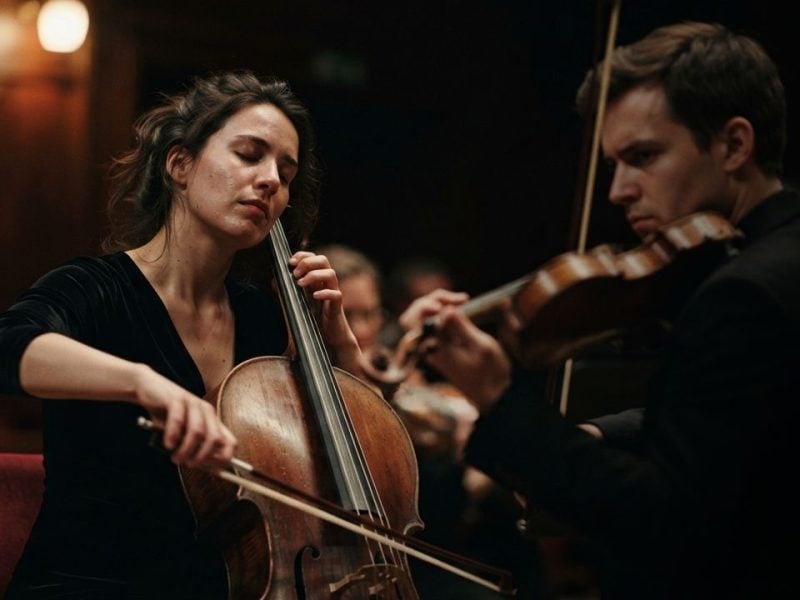
8. Cello: Shifting, Bowing, and Physical Control
The cello offers many of the same fundamental challenges as the violin while introducing its own physical demands.
Accurate Shifting
Because the cello’s fingerboard is relatively long, players frequently move their left hand between positions. These shifts must be controlled and accurately timed.
Bow Technique
The bow arm must produce consistent pressure and movement while handling a larger instrument. Advanced players learn to adjust bow technique according to register, articulation, dynamics, and musical context.
Physical Endurance
Holding an efficient posture for long rehearsals and performances requires physical conditioning. Poor technique can lead to unnecessary tension, making endurance more difficult.
9. Double Bass: Size, Reach, and Intonation
The double bass creates an unusual combination of technical and physical challenges.
Physical Scale
Its large dimensions mean that players must make substantial movements between notes and positions. Finger placement and shifting require careful spatial awareness.
Intonation
Like other fretless orchestral strings, the double bass demands accurate pitch placement without fixed frets. The greater distances involved can make precision especially demanding.
Strength and Efficiency
Players need enough physical strength to control the instrument and bow, but excessive force can interfere with agility. Efficient technique is therefore critical.
10. Timpani: More Than Hitting the Correct Drum
Timpani may appear straightforward because the player strikes a drum with mallets. In reality, advanced timpani playing requires sophisticated coordination and pitch awareness.
Tuning While Playing
Many timpani are equipped with pedals that allow the performer to change pitch. This creates a demanding coordination problem: the musician may need to strike, listen, adjust the pedal, and prepare for the next note within a very short period.
Consistent Striking Technique
Players must control mallet placement, speed, rebound, dynamics, and consistency. The goal is not simply to produce a sound but to execute highly controlled attacks.
Timing and Coordination
Timpani parts can require precise rhythmic placement alongside rapid physical movements. Pedaling adds another layer of complexity that is easy to underestimate.
How the Most Difficult Orchestral Instruments Compare
Difficulty is not identical across instruments. Each one concentrates its technical demands in different areas.
| Skill | Instruments Where It Is Especially Important |
|---|---|
| Intonation | Violin, viola, cello, double bass, French horn, oboe |
| Breath control | Oboe, bassoon, flute, trumpet |
| Embouchure | French horn, trumpet, flute, oboe |
| Complex fingering | Bassoon, flute, violin, trumpet |
| Bow control | Violin, viola, cello, double bass |
| Physical endurance | Double bass, cello, viola, trumpet |
| Pedal coordination | Timpani |
| Rapid coordination | Violin, flute, bassoon, trumpet |
| Pitch adjustment by ear | Strings, French horn, oboe, timpani |
This comparison shows why it is difficult to name a single “hardest orchestral instrument.” Difficulty depends on which technical skills a player finds most demanding.
Why Intonation Is One of the Biggest Obstacles
Intonation deserves special attention because it affects many instruments in different ways.
On a piano, the performer presses a key and receives a predetermined pitch. On many orchestral instruments, the player is responsible for creating and continually adjusting the pitch.
This is particularly obvious on fretless string instruments. Players must learn the exact spatial relationship between notes and develop the ability to recognize pitch differences by ear.
Wind players face a different version of the same challenge. Air pressure, embouchure, temperature, instrument resistance, and register can all influence pitch.
Developing reliable intonation usually requires:
- Slow and deliberate practice
- Long tones
- Scales and arpeggios
- Careful listening
- Recording and self-evaluation
- Work with a tuner
- Practice with other musicians
The ultimate goal is not merely to make a tuner display the correct number. A skilled orchestral musician learns to hear pitch relationships and make adjustments instinctively.
Physical Demands Can Make Mastery a Long-Term Process
Technical ability is closely connected to physical technique. Holding an instrument incorrectly or using unnecessary tension can make difficult passages significantly harder.
Musicians therefore spend years developing:
- Efficient posture
- Controlled movement
- Muscle coordination
- Flexibility
- Endurance
- Recovery between demanding passages
Physical conditioning should support technique rather than replace it. More force does not necessarily produce better playing. In many cases, advanced musicians achieve difficult results through smaller, more efficient movements.
Does the “Hardest” Instrument Really Exist?
There is no universally accepted hardest orchestral instrument. The answer depends on the player’s background, anatomy, musical experience, learning method, and individual strengths.
A musician with strong breath control may adapt quickly to a wind instrument but struggle with the fine motor demands of violin playing. Someone with excellent coordination may find complex fingering manageable but have difficulty developing a reliable embouchure.
The most difficult instruments are therefore best understood as instruments with high technical demands rather than instruments that are objectively impossible to learn.
How Long Does It Take to Master an Orchestral Instrument?
Mastery is measured in years rather than months. A beginner can often produce recognizable notes relatively quickly, but professional-level performance requires much more.
The learning process typically progresses through several stages:
Beginner Stage
The player learns basic posture, instrument handling, fingering, articulation, breathing, and simple musical patterns.
Intermediate Stage
Attention shifts toward intonation, consistency, scales, more complex rhythms, dynamic control, and musical interpretation.
Advanced Stage
Players work on speed, endurance, subtle articulation, difficult repertoire, ensemble coordination, and reliable performance under pressure.
Professional Mastery
At the highest level, technical movements become increasingly automatic. The musician can focus more attention on phrasing, ensemble awareness, interpretation, and musical communication without sacrificing precision.
Importantly, mastery does not mean reaching a point where there is nothing left to improve. Even experienced orchestral musicians continue refining technique throughout their careers.
Final Thoughts
The most difficult instruments to master in an orchestra are challenging for different reasons. The violin and viola demand extraordinary intonation and bow coordination. The cello and double bass combine fretless pitch control with significant physical requirements. The French horn places exceptional demands on pitch accuracy and embouchure control, while the oboe requires sophisticated reed management and breath control. The bassoon challenges players with complex fingering and physical coordination, and instruments such as the flute, trumpet, and timpani introduce their own demanding combinations of precision and timing.
Ultimately, instrumental difficulty comes from the number of skills a musician must coordinate consistently. The hardest part is rarely learning one isolated technique. It is learning to combine intonation, fingering, breathing, articulation, physical control, coordination, musical timing, and expression while performing accurately.
That is what makes orchestral musicianship so demanding—and why mastering a difficult orchestral instrument can take years of focused practice, careful instruction, and continual refinement.