
Classical music is often associated with grandeur, discipline, intellectual depth, and centuries-old concert traditions. Yet beneath those familiar qualities lies another dimension: sensuality. Long before modern ideas of romantic music, composers were using melody, harmony, rhythm, instrumentation, and performance to suggest intimacy, desire, longing, tenderness, and physical presence.
But what makes a piece of music feel sensual? Is sensuality created by the composer, the performer, the listener, or the cultural context surrounding the work? And how has the meaning of sensual classical music changed as musical culture has moved from royal courts and opera houses to recordings, streaming platforms, film, and digital performance spaces?
The answer is more complicated than simply identifying music as “sexy.” Classical music does not need explicit subject matter to evoke sensual feelings. Instead, it can create an atmosphere through sound itself. A lingering melody, an unexpected harmonic resolution, a warm string texture, or a gradual rhythmic pulse can communicate intimacy without saying a single word.
What Makes Classical Music Sensual?
Sensuality in music is largely about suggestion. Unlike visual art, music has no physical image that listeners can directly observe. Instead, it works through expectation, emotion, memory, rhythm, and sound.
A sensual musical experience may involve several elements at once:
- Slow or flexible tempos that create a feeling of spaciousness
- Legato melodies that seem to flow continuously
- Rich harmonies that create tension and release
- Warm instrumental colors, particularly strings, woodwinds, and certain keyboard sounds
- Dynamic contrasts that move gradually between intimacy and intensity
- Repetition that establishes a hypnotic or anticipatory quality
- Expressive performance, including rubato, articulation, and phrasing
None of these characteristics is inherently sexual. Their sensual effect depends on how they are combined and interpreted.
Sensuality Is Different From Explicitness
One of the most important distinctions is between sensuality and explicit sexuality.
An explicitly sexual piece may refer directly to erotic subjects. A sensual piece, by contrast, can remain ambiguous. It may evoke touch, closeness, vulnerability, anticipation, or romantic desire without describing any of them.
This ambiguity is one reason classical music can be particularly effective at creating sensual moods. Listeners are given space to construct their own emotional interpretation.
The Historical Roots of Sensuality in Classical Music
Sensual expression has existed in European art music for centuries, although its acceptable forms changed dramatically according to social and religious conventions.
Music was historically connected to dance, theatre, courtship, religious ritual, and aristocratic entertainment. Physical movement and emotional expression were therefore never entirely separate from musical culture.
Dance and the Body
Many early musical forms were designed for movement. Court dances, minuets, gavottes, sarabandes, and other forms translated bodily gestures into musical structures.
The relationship between music and physical movement helped establish a vocabulary of rhythm, repetition, anticipation, and release. Even when these pieces were later performed as purely instrumental concert works, their connection to the body remained part of their character.
The sarabande provides an especially interesting example. Its history is complicated and spans different cultures and periods, but the dance eventually became an important part of European Baroque music. Its slow, dignified character could carry considerable emotional weight when composers incorporated it into instrumental suites.
Opera Made Desire Audible
Opera provided composers with an even more direct way to explore sensuality. Unlike purely instrumental music, opera combines music with characters, costumes, movement, drama, and language.
From the Baroque period onward, composers frequently wrote scenes involving love, jealousy, seduction, temptation, and forbidden relationships. The orchestra could intensify these subjects by mirroring the emotional state of the characters.
This created a powerful artistic principle: music could express what characters could not openly say.
A melody could become a musical representation of desire. A harmonic delay could suggest uncertainty. A rising phrase could build anticipation. A sudden change in orchestration could transform an intimate moment into something dramatic.
Romanticism and the Language of Desire
The 19th-century Romantic movement significantly expanded the expressive possibilities of classical music.
Composers increasingly emphasized individual emotion, imagination, psychological conflict, and subjective experience. Love and longing became central themes in many musical works.
Chopin and Intimate Expression
The piano music of Frédéric Chopin demonstrates how sensuality can emerge from subtle musical choices.
His nocturnes are not necessarily “sensual” because they describe physical desire. Instead, their intimacy comes from the relationship between melody and accompaniment. A singing right-hand line floats above softly patterned harmonies, creating an impression of private reflection.
The piano itself contributes to this effect. Unlike a large orchestral ensemble, it can create an intimate musical environment in which a single performer seems to communicate directly with the listener.
Liszt and Musical Seduction
Franz Liszt approached sensuality differently. His music could be flamboyant, technically demanding, dramatic, and intensely theatrical.
The virtuoso performer became part of the experience. Audiences were not simply listening to a composition; they were watching a highly expressive physical performance.
This helped establish a lasting connection between classical virtuosity and charisma. The performer could become a central part of the emotional experience, using gesture, timing, physical movement, and sound to shape how an audience experienced the music.
Harmony, Tension, and Anticipation
One of the strongest explanations for musical sensuality lies in harmony.
Music frequently creates expectations and then delays their resolution. A chord may appear to promise one destination before moving somewhere unexpected. A melody may approach a satisfying note but postpone it.
This musical tension can create anticipation.
Although a simple mathematical curve cannot capture the emotional complexity of music, the basic idea of tension and release can be useful as an analogy. Listeners experience patterns over time, and their expectations influence how they perceive each new musical event.
Why Delayed Resolution Matters
Consider a melody that repeatedly approaches a point of resolution without immediately reaching it. The listener becomes increasingly aware of the missing conclusion.
Composers can exploit this effect through:
- Suspensions
- Chromatic harmony
- Dissonance
- Unexpected modulations
- Repeated melodic phrases
- Gradual crescendos
- Delayed cadences
These techniques are not inherently erotic. They are fundamental musical devices. However, when combined with a slow tempo, expressive phrasing, and an intimate orchestral texture, they can produce a strongly sensual impression.
Instrumentation and the Sound of Intimacy
Different instruments can carry different cultural associations.
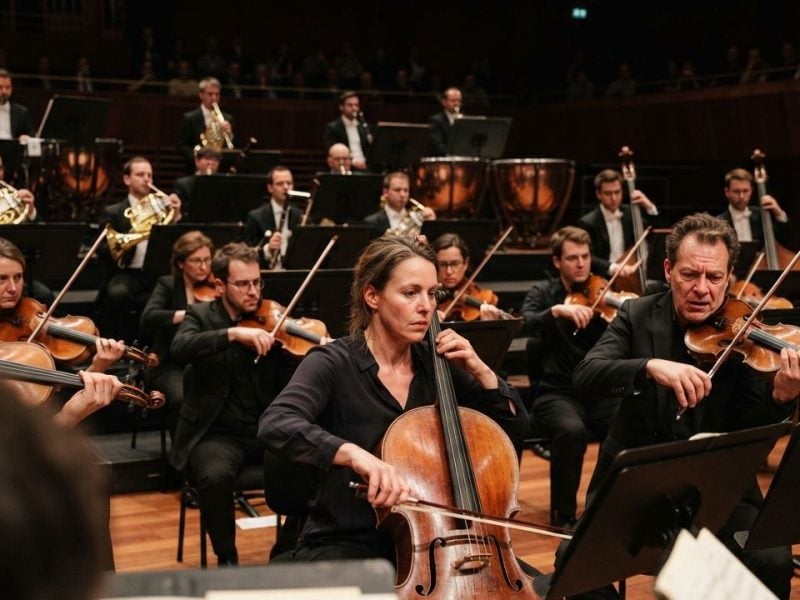
Strings are perhaps the most obvious example. Their ability to sustain notes and imitate the contours of the human voice makes them particularly effective at creating warmth and emotional continuity.
A solo violin can sound vulnerable and intimate. A cello can produce a darker, richer tone. A small string ensemble can create a sense of closeness that differs dramatically from the overwhelming scale of a symphony orchestra.
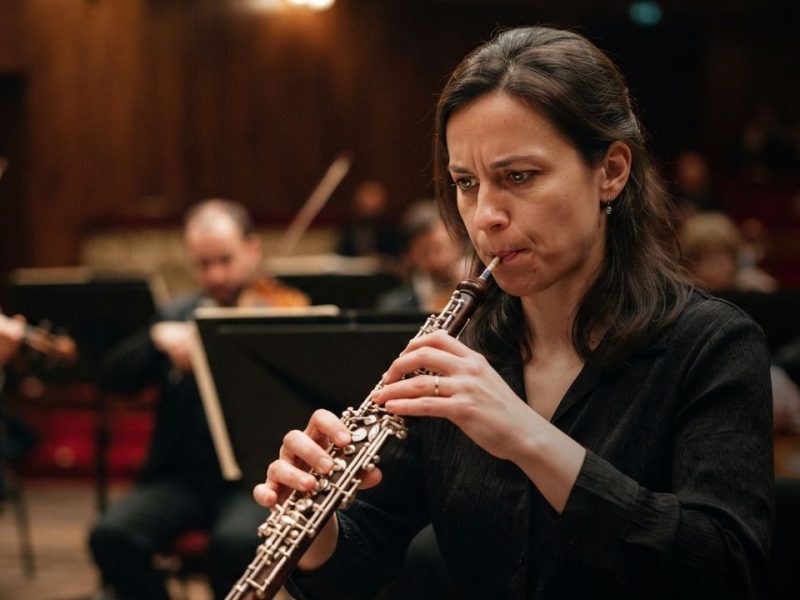
Woodwind instruments can produce similar effects. The breath required to produce sound gives instruments such as the flute, oboe, and clarinet a quality that can seem remarkably human.
Instrumental Color Matters
The following table illustrates how certain musical characteristics can contribute to perceptions of sensuality:
| Musical element | Possible effect |
|---|---|
| Legato strings | Warmth and continuity |
| Solo cello | Depth and intimacy |
| Soft piano | Privacy and reflection |
| Clarinet | Warm, rounded expressiveness |
| Slow tempo | Relaxation and anticipation |
| Chromatic harmony | Tension and uncertainty |
| Crescendo | Gradual emotional intensity |
| Rubato | Flexibility and spontaneity |
These associations are cultural rather than universal. A listener’s response depends on musical education, personal experience, cultural background, and context.
Sensuality in Ballet and Dance Music
Classical music becomes especially interesting when it is reunited with the body through dance.
Ballet demonstrates that sensuality can be communicated through choreography as well as sound. Composers and choreographers work together to coordinate rhythm, movement, gesture, and physical space.
Works by composers such as Tchaikovsky show how orchestral music can create an atmosphere of elegance, vulnerability, drama, and physical movement.
In ballet, the meaning of a musical phrase can change depending on how a dancer interprets it. A graceful gesture can make the same passage feel romantic; a dramatic movement can make it feel passionate; a restrained performance can make it feel mysterious.
This reinforces an important point: sensuality is not always contained inside the musical score. It can emerge from the relationship between music and performance.
The Role of the Performer
A composition provides instructions, but it does not determine every aspect of the final experience.
Performers make choices about:
- Tempo
- Phrasing
- Dynamics
- Articulation
- Timing
- Tone
- Physical gesture
- Interaction with other musicians
These decisions can significantly influence whether a piece feels detached, dramatic, romantic, intimate, or sensual.
Performance as Interpretation
Two pianists can perform exactly the same nocturne while creating noticeably different experiences.
One might emphasize structural precision and rhythmic consistency. Another might use more rubato, softer dynamics, and longer melodic phrases.
Neither interpretation is automatically correct. Classical performance has always involved negotiation between the written score and the performer’s artistic personality.
This is particularly important when discussing sensuality because sensuality often depends on nuance rather than musical notes alone.
Cultural Ideas About Sensual Classical Music
What one generation considers sensual may seem ordinary or even old-fashioned to another.
During different historical periods, audiences developed different expectations about romance, gender, physical expression, performance, and artistic sophistication.
Music does not exist in isolation from those expectations.
From Concert Halls to Popular Culture
In the 20th and 21st centuries, classical compositions increasingly appeared outside traditional concert settings.
Film scores, television, advertising, fashion, dance, and popular music have all borrowed classical techniques and repertoire to communicate romance and sophistication.
A familiar piece can acquire an entirely new meaning when placed alongside a particular visual scene.
This process demonstrates that sensuality is partly contextual. The same music heard in a concert hall, a ballet, a movie, or a private listening environment may evoke completely different associations.
How Recording Changed Musical Intimacy
The invention of sound recording transformed the relationship between performers and audiences.
A concert is temporary. A recording can be replayed repeatedly, allowing listeners to develop a highly personal relationship with a performance.
Headphones intensified this sense of intimacy. Instead of hearing an orchestra in a public hall, a listener could experience subtle details at close range.
This changed the physical scale of classical listening.
A quiet breath, bow movement, pedal change, or slight variation in tone could become part of the listener’s experience. Technology therefore did not simply preserve performances; it changed how musical intimacy could be experienced.
Sensual Performance in Digital Spaces
Today, musical performance exists across a wide range of digital environments.
Classical musicians can perform through livestreams, social platforms, subscription services, video channels, including adultcam and other online formats. The performer may appear physically distant while the digital presentation creates an unusually close visual and auditory experience.
This reflects a broader cultural shift in which performance has moved beyond traditional stages.
Adult platforms can also be mentioned within this wider history of digital performance, particularly because they demonstrate how contemporary audiences encounter performers through highly mediated, interactive spaces. The important point is not that classical music is inherently connected to adult entertainment, but that digital technology has expanded the environments in which performance, intimacy, spectatorship, and persona can intersect.
The camera changes the relationship between performer and audience. Framing, lighting, eye contact, proximity, and direct interaction can become part of the performance itself.
For classical musicians, similar principles can be found in close-up concert videos and livestreams, where the visual presentation of a musician becomes part of how audiences perceive the music.
Why Some Classical Music Feels More Sensual Than Other Music
There is no universal checklist that identifies a sensual composition.
However, certain combinations are especially likely to create that impression.
Common Characteristics
A piece may feel sensual when it combines several of the following:
- A sustained melodic line that resembles vocal expression.
- Moderate or slow pacing that allows details to unfold gradually.
- Harmonic ambiguity that avoids immediate resolution.
- Warm timbres produced by strings, woodwinds, or piano.
- Dynamic restraint rather than constant dramatic intensity.
- Repetition and variation that create familiarity and anticipation.
- Expressive performance choices that emphasize nuance.
- A cultural or visual context associated with romance or intimacy.
None of these characteristics guarantees a particular emotional response. They simply provide tools composers and performers can use to shape musical atmosphere.
Sensuality Without Words
Perhaps the most fascinating feature of classical music is its ability to communicate emotionally without literal language.
A listener does not need to know the historical background of a composition to feel its atmosphere. At the same time, historical knowledge can radically change interpretation.
A piece written for a courtly dance carries different associations from one created for an opera scene. A nocturne performed in a candlelit concert hall creates a different environment from the same piece played through headphones during a nighttime walk.
The listener completes the experience.
The Listener’s Imagination
Musical sensuality is therefore partly subjective. Personal memories, expectations, relationships, cultural references, and even the acoustics of a room can influence perception.
One person may hear tenderness where another hears melancholy. Someone may interpret a slow movement as romantic while another hears solitude.
That ambiguity is not a weakness. It is one of music’s greatest expressive strengths.
A Selection of Classical Music Often Associated With Sensual Atmosphere
While there is no definitive list of “sensual classical music,” several types of repertoire frequently demonstrate the musical characteristics discussed above.
| Musical tradition or work type | Why it may feel sensual |
|---|---|
| Romantic piano nocturnes | Intimate melody and expressive harmony |
| Slow string movements | Sustained warmth and emotional depth |
| Romantic opera arias | Vocal expression and dramatic desire |
| Impressionist piano music | Atmospheric harmony and color |
| Certain Baroque slow movements | Repetition, ornamentation, and measured pacing |
| Ballet music | Connection between sound and physical movement |
| Chamber music | Close, conversational interaction between instruments |
The most useful approach is not to label an entire genre as sensual. Instead, listen for the specific musical mechanisms that produce that response.
The Enduring Appeal of Sensual Classical Music
The sensuality of classical music is not a modern invention, nor is it limited to music explicitly concerned with romance.
Across centuries, composers have explored anticipation, intimacy, longing, beauty, vulnerability, and emotional tension. They have done so through melody, harmony, rhythm, instrumentation, theatrical performance, and silence.
Modern technology has expanded these possibilities rather than replacing them. Recordings, headphones, streaming services, video platforms, and digital performance spaces have given audiences new ways to experience musical intimacy.
Ultimately, classical music can be sensual because music itself is experienced through time, expectation, memory, and physical sensation. It does not have to describe desire literally to evoke it.
The most sensual classical compositions often leave something unsaid. They create tension without explaining it, approach resolution without rushing toward it, and allow the listener’s imagination to complete what the composer merely suggests.
That may be the enduring secret of musical sensuality: it is less about what the music tells us to feel than what the music invites us to imagine.